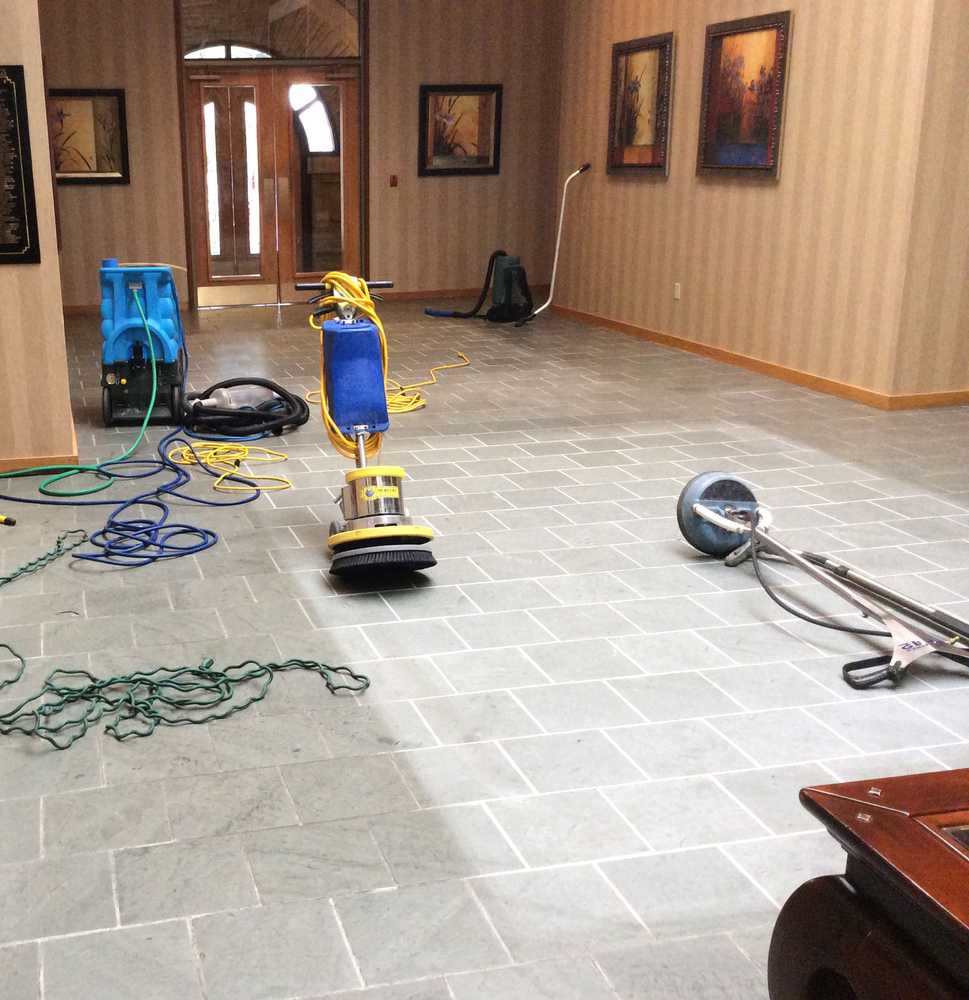
This is a very difficult question to answer, as it all depends on several factors - The amount of use the floor gets, what goes across the floors (ie trolleys etc) - How often it is cleaned (swept/vacuumed/mopped) and what it is cleaned with. Some brooms have quite abrasive bristles on them, which can cause damage to the floor. - Also some chemicals will eat away the sealer, so it is very important that you use a PH neutral floor cleaner on your sealed floors and that the chemical dilution rates are correct. Even a PH neutral floor cleaner will become alkaline if not diluted correctly, which will eat away at the floor sealer. - How many coats of sealer were laid on the floor the last time it was sealed. - The quality of the sealer used to seal the floor. - If the correct technique was used to seal the floor last time.
We do not move large furniture because we are not insured for such work but we can help you move your smaller items.
The process of stripping a floor is to ensure that all necessary old and worn sealer is removed; once removed your surfaces can be resealed.
Yes, our tile cleaning services are safe! Tile Cleaners® generally use only the highest quality water based products alongside our state of the art cleaning machinery to provide the best cleaning solution without compromising your surfaces. Stone tiles are porous and require more attention than man made tiles, which is why its extremely important to use the correct products and equipment necessary to bring your tiles back to their best possible condition. Tile Cleaners® prides itself on specifically catering for each tile variety.
If you want your surfaces to be their cleanest and looking their very best you need to have a professional remove as much of the old sealer as possible. Once this is done the cleaning process will be carried out and the sealer applied. You will have the freshest and cleanest possible floors once we are finished with the process.
Our professional team will go through the job processes with you step by step so you know exactly what you're getting. The process includes stripping any previous sealer if it was applied, the floor is then thoroughly cleaned and neutralised so that it is free of dust, residue and anything else that can affect the new sealer. A new sealer is applied to the dry floor and allowed to set. The newly sealed floor will not only look new again, it will be protected and result in your floors becoming easier to maintain.
It depends on the type of sealer used and the amount of foot traffic the tiles are being exposed to. Australia's Deepshield® range of deep impregnating water based sealer's, offer long term benefits with Deepshield Gold® lasting up to 15 years. Topical sealer's have a life expectancy of around 3 years. If you have a high amount of foot traffic or perhaps severe weather conditions(for outdoor tiles), you may experience a shorter lifetime. Sealing your floors can also depend on the tiles condition. Once they start showing patchy areas and are staining easily then you should have them resealed. Give us a call and we can assist you with all your enquiries.
We recommend that you measure each area separately. The simplest way to measure is by multiplying the width by the length. For example a room that is 3 meters long and 2 meters wide is 3 × 2 = 6m2 in total.
This can be a difficult question to answer, as it depends on several factors The amount of use, contact received(ie trolleys etc) How often it is cleaned (swept/vacuum/mopped) and what it is cleaned with. Some brooms have quite abrasive bristles on them, which can cause damage to the floor. Certain chemicals can erode the sealer, it is important that you use a PH neutral floor cleaner on your sealed floors and that the chemical dilution rates are correct. Even a PH neutral floor cleaner will become alkaline if not diluted correctly. How many coats of sealer were previously laid on the floor. The quality of the sealer used to seal the floor. If the correct technique was previously used to seal the floor.
Efflorescence is a problem that most porous surfaces can face. It's the tendency of the water to bring salts from the material to the surface as it evaporates. The water evaporates leaving the salts on the surface resulting in a whitish coating and ruining its finish. The only way to avoid this problem is to seal with one of our highest quality water resistant sealer's and to stop the source of the water that is penetrating the material, for example a water pipe leak or damaged grout.
Many types of flooring can damage fairly easily, any oily or harsh spills can damage the surface and penetrate the pores leaving a permanent stain, unreachable by domestic cleaning methods. We strongly recommend sealing your surfaces to maintain their fresh look and feel, to protect against permanent staining and to prevent any future accidental damage. Your surfaces will look their very best for longer and will be easier and more convenient to maintain.